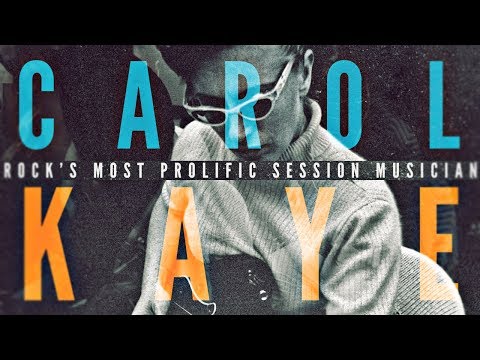
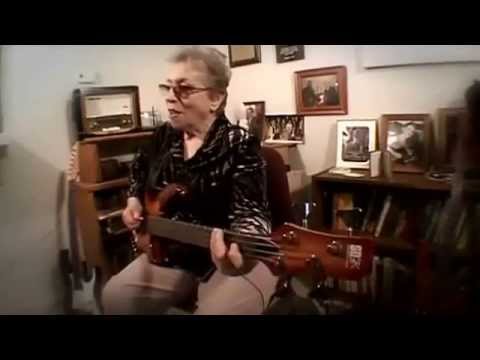
Carol Kaye (née Smith; born March 24, 1935) is an American musician. She is one of the most prolific recorded bass guitarists in rock and pop music, playing on an estimated 10,000 recordings in a career lasting over 65 years.
Kaye began playing guitar in her early teens; after some time as a guitar teacher, she began to perform regularly on the Los Angeles jazz and big band circuit. She started session work in 1957, and through a connection at Gold Star Studios began working for producers Phil Spector and Brian Wilson. After a bassist failed to turn up to a session in 1963, she switched to that instrument, quickly making a name for herself as one of the most in-demand session players of the 1960s, playing on numerous hits. She moved into playing on film soundtracks in the late 1960s, particularly for Quincy Jones and Lalo Schifrin, and began to release a series of tutoring books such as How To Play The Electric Bass. Kaye became less active towards the end of the 1970s, but has continued her career and attracted praise from other musicians.
During the peak of her years of session work, Kaye became part of a stable of Los Angeles–based musicians known as the Wrecking Crew. She appeared in the 2008 documentary The Wrecking Crew. In 2025, Kaye was selected for induction into the Rock and Roll Hall of Fame in the Musical Excellence Award category, but she rejected the honor.
Tap on any album for track list.





Brian Wilson’s Live at the Roxy Theatre returns for its 25th anniversary, featuring rare recordings and Bob Lizik’s authentic bass lines.

Denny Tedesco shares his side of the story following Carol Kaye’s Rock Hall rejection and criticism of The Wrecking Crew documentary.

Bass legend Carol Kaye says no to the Rock Hall, rejecting the “Wrecking Crew” name and standing by her identity as a studio musician

After decades behind countless hits, bass icon Carol Kaye is being honored with the Rock & Roll Hall of Fame's Musical Excellence Award in 2025.

In this episode, Paul Thompson lays down his (extremely subjective) list of his top 10 favorite bass lines (plus three honorable mentions) from iconic television shows from the 1970s-2000s.